Jalapeño: OpenAI's First Custom Chip, and What Custom Silicon Means for Your API Bill
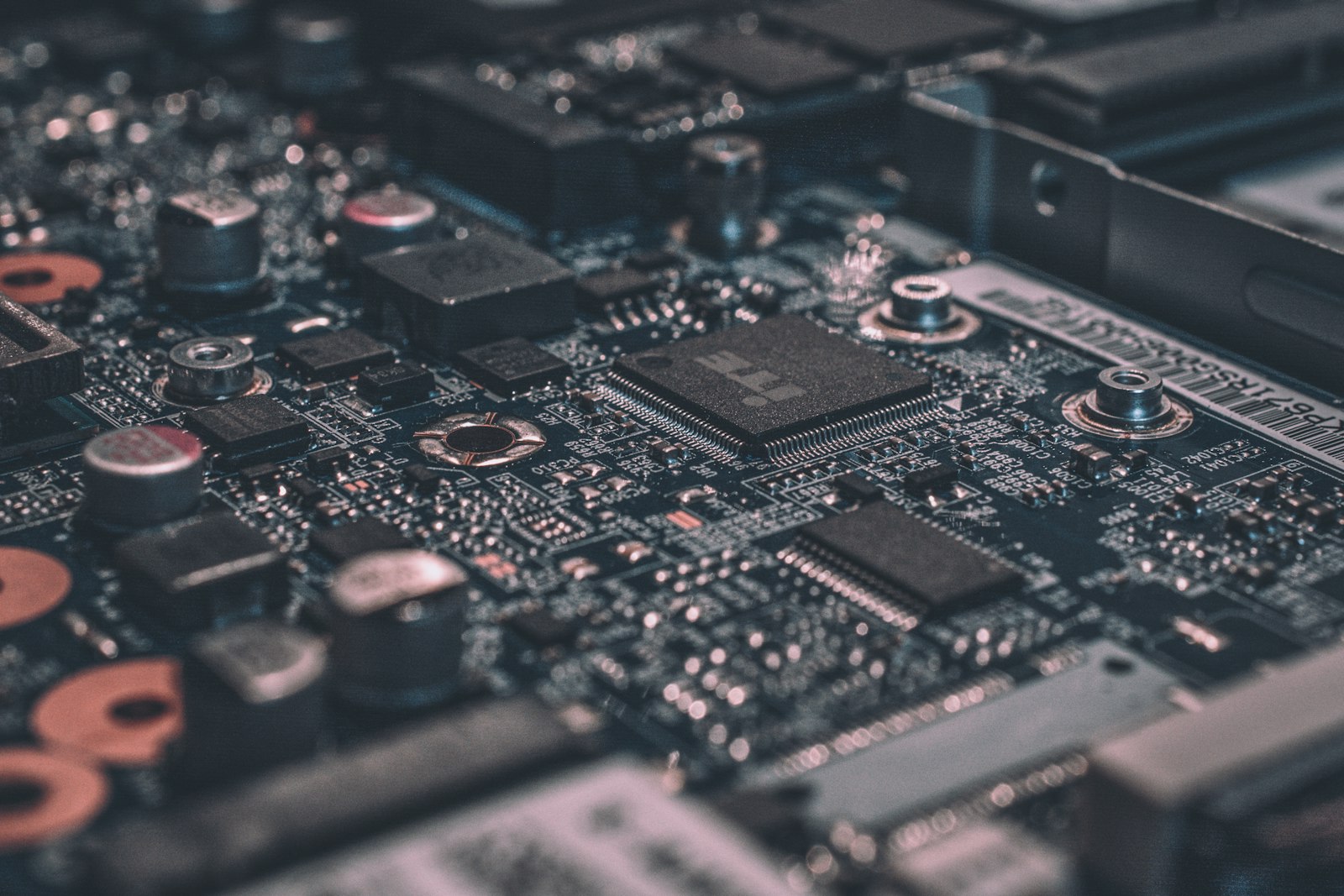
On June 24, 2026, OpenAI and Broadcom unveiled Jalapeño, OpenAI's first custom AI chip — an accelerator designed specifically for LLM inference, as TechCrunch reported. It's the first concrete product of the chip partnership the two companies announced in October 2025, and OpenAI is positioning it as the opening entry in a multi-generation compute platform rather than a one-off experiment.
What was actually announced
The load-bearing facts, per OpenAI's announcement and launch coverage:
- Inference, not training. Jalapeño is architected for serving models — the high-volume, margin-sensitive side of the business that ultimately sits behind every API call you make.
- A nine-month sprint. The companies say the chip went from initial design to manufacturing tape-out in about nine months, which they characterize as an unusually fast cycle for high-performance silicon — aided, in a nice bit of recursion, by OpenAI's own models being used in parts of the design and optimization process, a detail VentureBeat highlighted.
- Big efficiency claims. Early testing reportedly shows performance-per-watt "substantially better" than current state-of-the-art, and TechTimes reports the chip targets roughly 50% lower inference cost compared with typical AI GPUs.
- Timeline. Initial deployment is targeted for the end of 2026, "expanding in the years ahead."
OpenAI President Greg Brockman framed the rationale to TechCrunch simply: "We have a deep understanding of the workload... how can we build something that will be able to accelerate what's possible?"
One caveat worth flagging: the performance and cost figures are company claims from early testing, not independent benchmarks. Treat "50% cheaper" the way you'd treat any vendor number pre-third-party-validation — as a target with marketing gravity.
The custom-silicon race, briefly
Jalapeño makes OpenAI the latest hyperscale AI player to conclude that renting general-purpose GPUs forever is a losing position. Google has been running its own TPUs for a decade; Amazon built Trainium for the same reason, as TechCrunch notes in its coverage; Meta has its own accelerator program as well. The playbook is consistent: you know your workload better than a merchant silicon vendor does, inference volume is exploding, and every point of efficiency compounds across billions of requests.
What's notable about Jalapeño specifically is the specialization. This isn't a general AI accelerator; it's a chip architected around one company's view of LLM inference. That's a bet that transformer-style serving workloads are stable enough to burn into silicon — and a nine-month tape-out suggests the design iteration loop for custom chips is itself getting dramatically faster.
Will this make your API calls cheaper?
The honest answer: eventually, probably, and not linearly.
The bull case rests on the trend already underway. Epoch AI's data shows the price to reach a fixed capability level has fallen at a median of roughly 50x per year across benchmarks, and Gartner projects that inference on a trillion-parameter model will cost providers over 90% less by 2030 than in 2025 — with hardware efficiency a core driver. Custom silicon is exactly the kind of structural cost reduction that has historically ended up in list prices, because provider competition forces it there.
The bear case: cost reductions land on the provider's income statement first. A 50% drop in serving cost can fund margins, subsidize free tiers, or get reinvested in bigger models rather than flowing to your rate card. And Jalapeño's savings accrue to OpenAI's own workloads — nobody else can buy the chip.
Our read: developers will see the benefit, but unevenly — as sudden repricings, cheaper new mid-tier models, and widening gaps between providers who own silicon and those who don't. Which is one more argument against hardcoding a single model into your stack: when the hardware layer is shifting this fast, the price/performance leaderboard shifts with it, and the teams positioned to benefit are the ones who can re-route without a rewrite.
Sources
- OpenAI unveils its first custom chip, built by Broadcom — TechCrunch
- OpenAI and Broadcom unveil LLM-optimized inference chip — OpenAI
- OpenAI's First Custom AI Chip Targets 50% Cheaper Inference — TechTimes
- OpenAI unveils first custom AI inference chip, Jalapeño, with Broadcom — VentureBeat
- LLM inference prices have fallen rapidly but unequally across tasks — Epoch AI
- Gartner press release on 2030 inference costs — Gartner Newsroom